Buy dmcmc.com ?
We are moving the project
dmcmc.com .
Are you interested in purchasing the domain
dmcmc.com ?
domain@kv-gmbh.de · 0541-91531010
Buy dmcmc.com ?
Does the pseudocode match the n-step SARSA algorithm?
The pseudocode provided matches the n-step SARSA algorithm. The algorithm uses n-step updates to estimate the action-value function, and the pseudocode reflects this by incorporating the n-step return calculation. Additionally, the pseudocode includes the update step for the action-value function using the n-step return and the TD error, which is a key component of the n-step SARSA algorithm. Therefore, the pseudocode aligns with the n-step SARSA algorithm in terms of its structure and key steps. **
What is the convergence of sqrt(n^2 + 1)/n?
The convergence of the sequence sqrt(n^2 + 1)/n is 1. This can be seen by taking the limit as n approaches infinity. As n becomes very large, the n^2 term dominates the 1 term inside the square root, and the expression becomes approximately sqrt(n^2)/n, which simplifies to n/n = 1. Therefore, the sequence converges to 1 as n goes to infinity. **
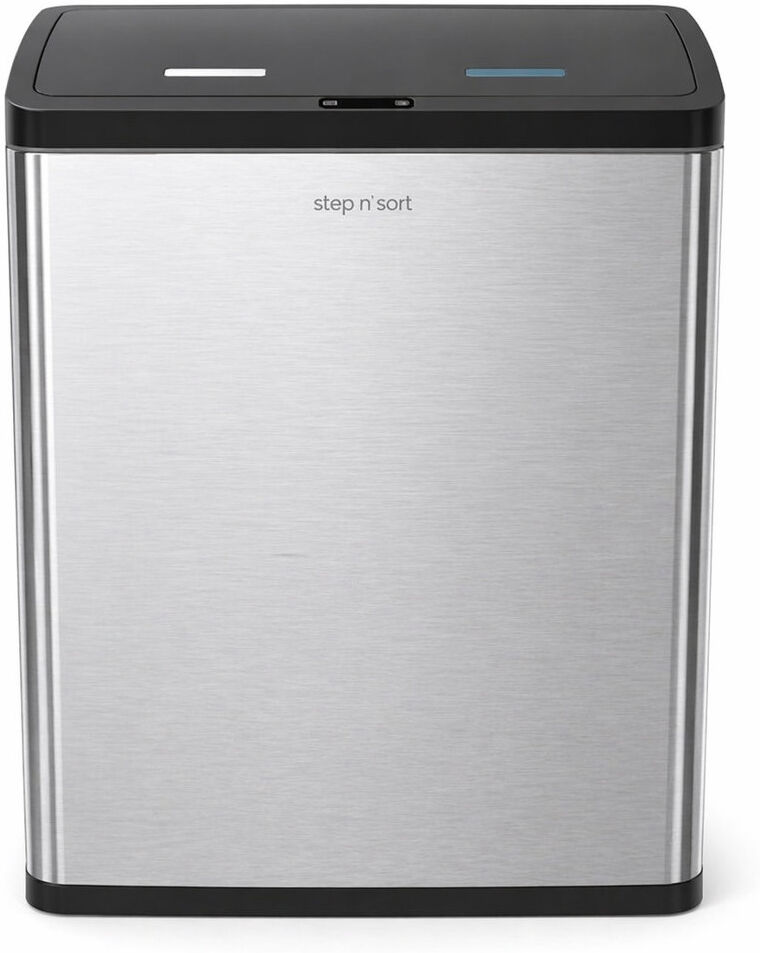

Similar search terms for The-Step-N-Sort
Top-Angebote
Products related to The-Step-N-Sort:
-
The Step N' Sort 40L Dual Kitchen Recycling Bin with Pedal, 2 Compartments, Slim Space-Saving Design White 11LKeep your kitchen organised and make recycling effortless with this 40L dual kitchen recycling bin. Designed with two 20-litre compartments, it allows you to easily separate general waste and recyclables in one convenient, space-saving unit—ideal for modern homes, flats, and busy households. The hands-free pedal operation ensures hygienic everyday use, helping you avoid contact with the lid while cooking or cleaning. A soft-close mechanism provides smooth and quiet closing, preventing slamming and reducing wear over time. Each compartment features a removable inner bucket with integrated handles, making it quick and easy to empty, clean, and maintain. The practical design helps minimise odours and keeps your kitchen environment fresh. With its slim, space-efficient shape, this recycling bin fits neatly against cabinets or in tight spaces without sacrificing capacity. It’s a practical solution for keeping your kitchen tidy while supporting responsible waste separation. Whether you're managing everyday household waste or improving your recycling habits, this dual compartment bin offers a simple, effective, and stylish solution. Dual Compartment Recycling Made Easy – 2 × 20L sections let you separate general waste and recycling in one convenient kitchen bin. Hands-Free Pedal Operation – Hygienic step-on lid allows easy use while cooking or cleaning, with no need to touch the bin. Soft-Close Lid for Quiet Use – Smooth closing mechanism prevents slamming and reduces noise in busy households. Helps Keep Kitchens Fresh & Organised – Designed for easy maintenance and effective waste separation to reduce clutter and odours. Brand Name: The Step N' Sort. Colour: White47,99 £*Shipping: 4,99 £Secure redirect to the provider
-
The Step N' Sort 43L Dual Kitchen Recycling Bin with Pedal, 2 Compartments, Slim Space-Saving Design Silver 43LDesigned for modern UK kitchens, this 43 litre dual compartment recycling bin makes waste separation simple, hygienic, and space-efficient. Featuring two spacious inner sections, it allows you to easily separate recycling and general waste in one compact unit—ideal for flats, smaller kitchens, and busy households. The hands-free pedal operation ensures hygienic everyday use, helping you avoid contact while cooking or cleaning. A soft-close lid provides smooth, quiet closing to reduce noise and prevent slamming. Each compartment includes a removable inner bucket with sturdy handles, making it easy to lift out, empty, and clean. The practical design helps keep your kitchen fresh and organised while simplifying your daily routine. With its slim, space-saving shape, this bin fits neatly against cabinets or in tighter spaces without sacrificing capacity—making it a reliable and efficient solution for everyday waste and recycling. Brand Name: The Step N' Sort.89,99 £*Shipping: 0,00 £Secure redirect to the provider
-
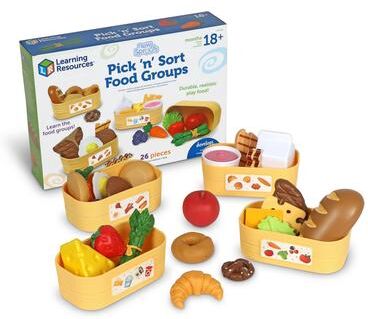
Learning Resources New Sprouts Pick 'n' Sort Food Groups - MultiSort your way to new food skills! Kids grab their sorting baskets, then sort the 21 play food pieces into fruits and veggies, grains, meats, and dairy. Includes 4 baskets, 5 protein foods, 6 produce, 6 grains, and 5 dairy foods.38,99 $*Shipping: 0,00 $Secure redirect to the provider


-
What is the absolute convergence of 1/n * sqrt(n)?
The series 1/n * sqrt(n) is not absolutely convergent. To show this, we can consider the absolute value of the series, which is 1/sqrt(n). This series is the harmonic series, which is known to be divergent. Therefore, the original series 1/n * sqrt(n) is also not absolutely convergent. **
-
Which sorting algorithm is better: Insertion Sort, Selection Sort, or Bubble Sort and why?
Among the three sorting algorithms, Insertion Sort is generally considered better in terms of performance. This is because Insertion Sort has an average time complexity of O(n^2), which is better than the average time complexity of O(n^2) for both Selection Sort and Bubble Sort. Additionally, Insertion Sort is more efficient when dealing with small datasets, as it has a relatively low overhead. Overall, Insertion Sort is often preferred over Selection Sort and Bubble Sort for its better average time complexity and efficiency with small datasets. **
-
How does the selection sort algorithm work?
The selection sort algorithm works by dividing the input list into two parts: the sorted part and the unsorted part. It then repeatedly finds the smallest (or largest, depending on the sorting order) element from the unsorted part and swaps it with the first unsorted element, effectively expanding the sorted part. This process continues until the entire list is sorted. Selection sort has a time complexity of O(n^2) and is not suitable for large datasets, but it is simple and easy to implement. **
-
How can one prove the convergence of the sequence n(n+1)?
To prove the convergence of the sequence n(n+1), one can use the limit definition of convergence. By taking the limit as n approaches infinity of the sequence n(n+1), one can show that the limit exists and is finite. This can be done by simplifying the expression n(n+1) and then taking the limit as n approaches infinity. If the limit exists and is finite, then the sequence n(n+1) converges. **
How do I implement the Insertion Sort algorithm in Python?
To implement the Insertion Sort algorithm in Python, you can create a function that takes a list as input. Within the function, use a for loop to iterate through the list starting from the second element. For each element, use another loop to compare it with the elements before it and swap them if necessary to place the element in its correct position. Continue this process until the entire list is sorted. Finally, return the sorted list. Here's an example of the implementation: ```python def insertion_sort(arr): for i in range(1, len(arr)): key = arr[i] j = i - 1 while j >= 0 and key < arr[j]: arr[j + 1] = arr[j] j -= 1 arr[j + 1] = key return arr ``` You can then call this function and pass a list as an argument to sort it using the Insertion Sort algorithm. **
What does the flowchart for the Counting Sort algorithm look like?
The flowchart for the Counting Sort algorithm typically consists of a series of boxes representing different steps in the algorithm. It starts with initializing an auxiliary array to store the count of each element in the input array. Then, it calculates the cumulative sum of the counts to determine the position of each element in the sorted output array. Finally, it places each element in its correct position in the output array based on the counts and cumulative sums. The flowchart usually includes loops for iterating through the input array and the auxiliary arrays. **
Top-Angebote
Products related to The-Step-N-Sort:
-
The Step N' Sort Step N' Sort 60L Touchless Dual Recycling Bin with Motion Sensor, 2 x 30L Removable Buckets SilverTransform the way you manage household waste with the Step N' Sort 60L Touchless Dual Recycling Bin. Designed for modern kitchens, this premium stainless steel bin combines hands-free convenience with effortless waste separation, helping keep your home cleaner, more organised, and more hygienic. The built-in motion sensor opens the lid automatically with a simple wave of your hand, reducing contact and making everyday clean-up easier. Inside, two removable 30L compartments allow you to separate recycling and general waste without taking up additional floor space. Finished in fingerprint-resistant stainless steel with a smooth soft-close lid, the Step N' Sort Dual Bin delivers both style and functionality. Whether you're preparing meals, cleaning up after family dinners, or sorting recyclables, this smart waste solution helps keep your kitchen looking its best. ✔ Touchless motion sensor operation for hygienic, hands-free use ✔ Two removable 30L compartments for easy recycling and waste separation ✔ Soft-close lid prevents slamming and reduces noise ✔ Fingerprint-resistant stainless steel finish maintains a clean appearance ✔ Removable inner buckets make emptying and cleaning simple ✔ Large 60L capacity ideal for busy households and family kitchens Upgrade your kitchen with a smarter, cleaner, and more convenient recycling solution from Step N' Sort—trusted by households across North America for over 17 years. Brand Name: The Step N' Sort.122,99 £*Shipping: 0,00 £Secure redirect to the provider
-
The Step N' Sort 40L Dual Kitchen Recycling Bin with Pedal, 2 Compartments, Slim Space-Saving Design Black 11LKeep your kitchen organised and make recycling effortless with this 40L dual kitchen recycling bin. Designed with two 20-litre compartments, it allows you to easily separate general waste and recyclables in one convenient, space-saving unit—ideal for modern homes, flats, and busy households. The hands-free pedal operation ensures hygienic everyday use, helping you avoid contact with the lid while cooking or cleaning. A soft-close mechanism provides smooth and quiet closing, preventing slamming and reducing wear over time. Each compartment features a removable inner bucket with integrated handles, making it quick and easy to empty, clean, and maintain. The practical design helps minimise odours and keeps your kitchen environment fresh. With its slim, space-efficient shape, this recycling bin fits neatly against cabinets or in tight spaces without sacrificing capacity. It’s a practical solution for keeping your kitchen tidy while supporting responsible waste separation. Whether you're managing everyday household waste or improving your recycling habits, this dual compartment bin offers a simple, effective, and stylish solution. Dual Compartment Recycling Made Easy – 2 × 20L sections let you separate general waste and recycling in one convenient kitchen bin. Hands-Free Pedal Operation – Hygienic step-on lid allows easy use while cooking or cleaning, with no need to touch the bin. Soft-Close Lid for Quiet Use – Smooth closing mechanism prevents slamming and reduces noise in busy households. Helps Keep Kitchens Fresh & Organised – Designed for easy maintenance and effective waste separation to reduce clutter and odours. Brand Name: The Step N' Sort. Colour: Black53,99 £*Shipping: 4,99 £Secure redirect to the provider
-
The Step N' Sort 40L Dual Kitchen Recycling Bin with Pedal, 2 Compartments, Slim Space-Saving Design White 11LKeep your kitchen organised and make recycling effortless with this 40L dual kitchen recycling bin. Designed with two 20-litre compartments, it allows you to easily separate general waste and recyclables in one convenient, space-saving unit—ideal for modern homes, flats, and busy households. The hands-free pedal operation ensures hygienic everyday use, helping you avoid contact with the lid while cooking or cleaning. A soft-close mechanism provides smooth and quiet closing, preventing slamming and reducing wear over time. Each compartment features a removable inner bucket with integrated handles, making it quick and easy to empty, clean, and maintain. The practical design helps minimise odours and keeps your kitchen environment fresh. With its slim, space-efficient shape, this recycling bin fits neatly against cabinets or in tight spaces without sacrificing capacity. It’s a practical solution for keeping your kitchen tidy while supporting responsible waste separation. Whether you're managing everyday household waste or improving your recycling habits, this dual compartment bin offers a simple, effective, and stylish solution. Dual Compartment Recycling Made Easy – 2 × 20L sections let you separate general waste and recycling in one convenient kitchen bin. Hands-Free Pedal Operation – Hygienic step-on lid allows easy use while cooking or cleaning, with no need to touch the bin. Soft-Close Lid for Quiet Use – Smooth closing mechanism prevents slamming and reduces noise in busy households. Helps Keep Kitchens Fresh & Organised – Designed for easy maintenance and effective waste separation to reduce clutter and odours. Brand Name: The Step N' Sort. Colour: White47,99 £*Shipping: 4,99 £Secure redirect to the provider
-
The Step N' Sort 43L Dual Kitchen Recycling Bin with Pedal, 2 Compartments, Slim Space-Saving Design Silver 43LDesigned for modern UK kitchens, this 43 litre dual compartment recycling bin makes waste separation simple, hygienic, and space-efficient. Featuring two spacious inner sections, it allows you to easily separate recycling and general waste in one compact unit—ideal for flats, smaller kitchens, and busy households. The hands-free pedal operation ensures hygienic everyday use, helping you avoid contact while cooking or cleaning. A soft-close lid provides smooth, quiet closing to reduce noise and prevent slamming. Each compartment includes a removable inner bucket with sturdy handles, making it easy to lift out, empty, and clean. The practical design helps keep your kitchen fresh and organised while simplifying your daily routine. With its slim, space-saving shape, this bin fits neatly against cabinets or in tighter spaces without sacrificing capacity—making it a reliable and efficient solution for everyday waste and recycling. Brand Name: The Step N' Sort.89,99 £*Shipping: 0,00 £Secure redirect to the provider
-
Does the pseudocode match the n-step SARSA algorithm?
The pseudocode provided matches the n-step SARSA algorithm. The algorithm uses n-step updates to estimate the action-value function, and the pseudocode reflects this by incorporating the n-step return calculation. Additionally, the pseudocode includes the update step for the action-value function using the n-step return and the TD error, which is a key component of the n-step SARSA algorithm. Therefore, the pseudocode aligns with the n-step SARSA algorithm in terms of its structure and key steps. **
-
What is the convergence of sqrt(n^2 + 1)/n?
The convergence of the sequence sqrt(n^2 + 1)/n is 1. This can be seen by taking the limit as n approaches infinity. As n becomes very large, the n^2 term dominates the 1 term inside the square root, and the expression becomes approximately sqrt(n^2)/n, which simplifies to n/n = 1. Therefore, the sequence converges to 1 as n goes to infinity. **
-
What is the absolute convergence of 1/n * sqrt(n)?
The series 1/n * sqrt(n) is not absolutely convergent. To show this, we can consider the absolute value of the series, which is 1/sqrt(n). This series is the harmonic series, which is known to be divergent. Therefore, the original series 1/n * sqrt(n) is also not absolutely convergent. **
-
Which sorting algorithm is better: Insertion Sort, Selection Sort, or Bubble Sort and why?
Among the three sorting algorithms, Insertion Sort is generally considered better in terms of performance. This is because Insertion Sort has an average time complexity of O(n^2), which is better than the average time complexity of O(n^2) for both Selection Sort and Bubble Sort. Additionally, Insertion Sort is more efficient when dealing with small datasets, as it has a relatively low overhead. Overall, Insertion Sort is often preferred over Selection Sort and Bubble Sort for its better average time complexity and efficiency with small datasets. **
Similar search terms for The-Step-N-Sort
-
Learning Resources New Sprouts Pick 'n' Sort Food Groups - MultiSort your way to new food skills! Kids grab their sorting baskets, then sort the 21 play food pieces into fruits and veggies, grains, meats, and dairy. Includes 4 baskets, 5 protein foods, 6 produce, 6 grains, and 5 dairy foods.38,99 $*Shipping: 0,00 $Secure redirect to the provider
-
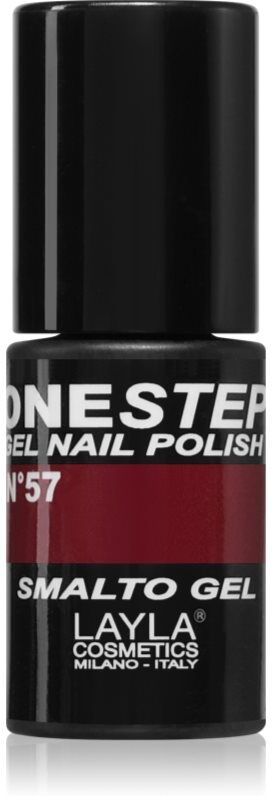
Layla Cosmetics One Step nail polish shade n.57 5 mlLayla Cosmetics One Step, 5 ml, Nail Varnishes for Women, A gorgeous manicure as though you’d just left the nail salon? The Layla Cosmetics One Step nail polish lets you achieve it in the comfort of your own home. It coats the surface of the nail with a continuous layer of long-lasting, intense colour with a glossy finish, helping to give your nails a manicured, perfectly groomed look. You can use it to accentuate your nails or perhaps to enhance your outfit and style. So which colour will you choose to make your nails pop? Characteristics: bright, rich colour ensures a high gloss easy to apply long-lasting use only with a LED nail lamp How to use: Apply the polish using a brush for polish-free, degreased nails. For best results, apply two layers.2,97 £*Shipping: 3,99 £Secure redirect to the provider
-
Brabantia Sort & Go 40 Litre Rubbish Bin Soft Beige 25 LFeed your empty packaging, bottles, cans - and anything else you want to be sorted - to this handy 40-liter Brabantia Sort & Go Recycle Bin. It fits snugly in corners, flat against the wall, and has a large handle for easy carrying and emptying. Just what you need for a smooth-running recycling operation at home! Brand Name: Brabantia. Colour: Soft Beige, Capacity: 25 L44,99 £*Shipping: 4,99 £Secure redirect to the provider
-
How does the selection sort algorithm work?
The selection sort algorithm works by dividing the input list into two parts: the sorted part and the unsorted part. It then repeatedly finds the smallest (or largest, depending on the sorting order) element from the unsorted part and swaps it with the first unsorted element, effectively expanding the sorted part. This process continues until the entire list is sorted. Selection sort has a time complexity of O(n^2) and is not suitable for large datasets, but it is simple and easy to implement. **
-
How can one prove the convergence of the sequence n(n+1)?
To prove the convergence of the sequence n(n+1), one can use the limit definition of convergence. By taking the limit as n approaches infinity of the sequence n(n+1), one can show that the limit exists and is finite. This can be done by simplifying the expression n(n+1) and then taking the limit as n approaches infinity. If the limit exists and is finite, then the sequence n(n+1) converges. **
-
How do I implement the Insertion Sort algorithm in Python?
To implement the Insertion Sort algorithm in Python, you can create a function that takes a list as input. Within the function, use a for loop to iterate through the list starting from the second element. For each element, use another loop to compare it with the elements before it and swap them if necessary to place the element in its correct position. Continue this process until the entire list is sorted. Finally, return the sorted list. Here's an example of the implementation: ```python def insertion_sort(arr): for i in range(1, len(arr)): key = arr[i] j = i - 1 while j >= 0 and key < arr[j]: arr[j + 1] = arr[j] j -= 1 arr[j + 1] = key return arr ``` You can then call this function and pass a list as an argument to sort it using the Insertion Sort algorithm. **
-
What does the flowchart for the Counting Sort algorithm look like?
The flowchart for the Counting Sort algorithm typically consists of a series of boxes representing different steps in the algorithm. It starts with initializing an auxiliary array to store the count of each element in the input array. Then, it calculates the cumulative sum of the counts to determine the position of each element in the sorted output array. Finally, it places each element in its correct position in the output array based on the counts and cumulative sums. The flowchart usually includes loops for iterating through the input array and the auxiliary arrays. **
* All prices are inclusive of VAT and, if applicable, plus shipping costs. The offer information is based on the details provided by the respective shop and is updated through automated processes. Real-time updates do not occur, so deviations can occur in individual cases. ** Note: Parts of this content were created by AI.