Buy dmcmc.com ?
We are moving the project
dmcmc.com .
Are you interested in purchasing the domain
dmcmc.com ?
domain@kv-gmbh.de · 0541-91531010
Buy dmcmc.com ?
What is the difference between il faut que and il faut?
"Il faut" is used to express a general necessity or obligation, while "il faut que" is used to introduce a specific action or event that is necessary or required. For example, "il faut manger" means "it is necessary to eat" in a general sense, while "il faut que tu manges" means "you need to eat" in a specific sense. "Il faut" is used to make a general statement about what is necessary, while "il faut que" is used to specify what needs to be done. **
When do you use il faut and il ne faut pas?
"Il faut" is used to express what is necessary or required, while "il ne faut pas" is used to express what is not allowed or should be avoided. For example, you would use "il faut" to say "il faut étudier pour réussir" (it is necessary to study to succeed), and "il ne faut pas" to say "il ne faut pas fumer dans ce lieu" (smoking is not allowed in this place). These expressions are used to give advice, make recommendations, or set rules. **

Similar search terms for Faut
Top-Angebote
Products related to Faut:
-
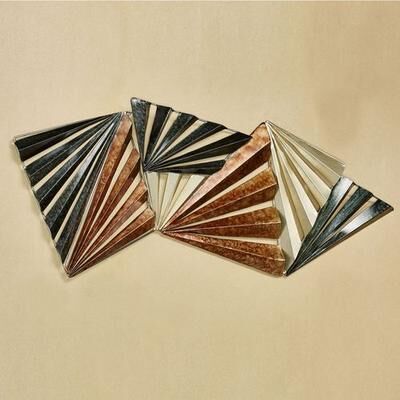
Touch of Class Convergence Abstract Wall Art Multi Metallic , Multi MetallicA Convergence of style and abstract beauty crafts this dynamic abstract wall art. With an openwork dimensional design, the metal wall art features flaring rays in hand-finished charcoal gray, bronze, and platinum hues. Modern artwork may hang...79,99 $*Shipping: 15,95 $Secure redirect to the provider
-
Dr Irena Eris Algorithm filler eye cream for wrinkle correction 15 mlDr Irena Eris Algorithm, 15 ml, Eye Creams and Gels for Women, The eye area is a highly sensitive area, as the skin there is exceptionally thin and fragile, making it more susceptible to signs of fatigue and ageing. It therefore also requires special treatment with ingredients and consistencies designed exactly for its needs. The Dr Irena Eris Algorithm eye cream takes care of specific issues in the eye area. It delivers the nourishment and hydration needed for the skin around your eyes, improving its quality and restoring its vitality and a fresh, rested look. Characteristics: smooths wrinkles and fine lines evens skin tone and brightens it up beautifully gives the skin elasticity refreshes and softens the eye area How to use: In the morning and/or evening, apply the product around the eye contours by dabbing lightly until fully absorbed.27,20 £*Shipping: 3,99 £Secure redirect to the provider
-
Maths on the Back of an Envelope by Rob Eastaway - Popular Maths Paperback - Clever Estimation Tricks for Curious Adult Readers - HarperCollins, 208Discover the art of estimation with Maths on the Back of an Envelope by Rob Eastaway. This popular maths non-fiction book, published by HarperCollins, shows you how to tackle everyday puzzles using nothing more than a pencil, a scrap of paper, and a little logical thinking. Across 208 pages, Eastaway guides you through bite-sized puzzles and practical rules of thumb, encouraging you to sketch a rough model of a problem before worrying about precision. You'll learn how to estimate crowd sizes, count wildlife, and tackle other everyday challenges without needing a calculator. A warm and witty guide to maths in the real world, this book is perfect for anyone who enjoys numbers and wants to develop their estimation skills.8,99 £*Shipping: 2,99 £Secure redirect to the provider
-
Uplifted Finds Plush Simulation Mini Mouse Trio Plush Simulation Mini Mouse Trio"Keep the ""hunt"" alive with this 3Piece Plush Simulation Mouse Set. Designed specifically for kittens and adult cats who love highspeed chasing and tossing, these minimice are the perfect size for ""mouthcarrying""allowing your cat to proudly trot..."30,97 $*Shipping: 0,00 $Secure redirect to the provider


-
How does "il faut" work in French?
"Il faut" is a common expression in French that is used to convey the idea of necessity or obligation. It is followed by an infinitive verb and is used to express what needs to be done or what is necessary in a given situation. For example, "Il faut manger" means "It is necessary to eat." This expression is used to give advice, make suggestions, or express general truths. **
-
What is the past tense of il faut?
The past tense of "il faut" is "il a fallu." This is the third person singular form of the verb "falloir" in the past tense. It is used to indicate that something was necessary or required in the past. For example, "Il a fallu partir tôt ce matin" means "It was necessary to leave early this morning." **
-
Why do we say "il faut" in French instead of "on doit"? One reads "il faut" everywhere, very rarely "on doit." Why?
"We say 'il faut' in French instead of 'on doit' because 'il faut' is a more common and idiomatic expression in the French language. It is used to convey the idea of necessity or obligation in a more formal and impersonal way. On the other hand, 'on doit' is more direct and personal, implying a specific obligation or duty. Therefore, 'il faut' is preferred in a wider range of contexts and is considered more polite and appropriate in formal or general statements." **
-
Why do people say "il faut" in French instead of "on doit"? "Il faut" is read everywhere, while "on doit" is very, very rarely seen. Why?
The phrase "il faut" is used in French to express the idea of necessity or obligation, while "on doit" is used to express the idea of duty or responsibility. The use of "il faut" is more common because it is a more general and impersonal way of expressing necessity, whereas "on doit" is more specific and implies a direct responsibility or obligation. Additionally, "il faut" is a fixed expression in French, while "on doit" can be more easily replaced by other phrases or constructions. Therefore, "il faut" is used more frequently in written and spoken French. **

Has anyone of you ever read the book Il faut sauver Saïd?
As an AI language model, I don't have personal experiences or the ability to read books. However, "Il faut sauver Saïd" is a French novel written by Brigitte Smadja. It tells the story of a young boy named Saïd who is struggling to find his place in the world. The novel addresses themes of identity, immigration, and belonging, and has been well-received for its powerful storytelling and thought-provoking content. If you have read the book, I would love to hear your thoughts on it! **
What is the difference between "il faut" and "on a besoin" in French?
"Il faut" and "on a besoin" both express a need or necessity in French, but they are used in slightly different contexts. "Il faut" is used to express a general necessity or obligation, while "on a besoin" is used to express a specific need or requirement. For example, "Il faut manger pour vivre" (One must eat to live) expresses a general necessity, while "On a besoin de nourriture pour survivre" (We need food to survive) expresses a specific need. **
Top-Angebote
Products related to Faut:
-
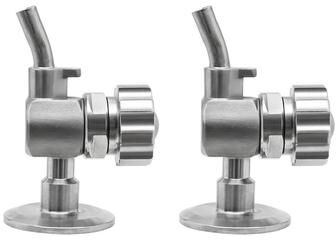
Multicon Wholesale Hub Stainless Steel Sampling Valve For Homebrewing Clamp End Valve Stainless Steel Sampling Valve For Homebrewing Clamp End ValveUnlock precise liquid sampling with the 2 PCS Stainless Steel Sampling Valve designed specifically for homebrewers and brewery enthusiasts. Made with SS304 stainless steel, these valves offer superior durability, ensuring years of rustfree, reliable...239,97 $*Shipping: 0,00 $Secure redirect to the provider
-
Dr Irena Eris Algorithm gift set for skin rejuvenationDr Irena Eris Algorithm, 1 pc, Cream masks for Women, Everything for beautiful-looking skin in one package. The Dr Irena Eris Algorithm beauty gift set contains not one but several products to help you create or enrich your daily beauty routine and make you or your loved ones happy to get it as a gift. The set contains: Dr Irena Eris Algorithm regenerating day cream SPF 20 50 ml Dr Irena Eris Algorithm filler eye cream for wrinkle correction 15 ml Dr Irena Eris Algorithm deeply moisturising mask for face and neck 30 ml Characteristics: for perfectly soft and smooth skin a treat for any woman to restore skin firmness for mature skin64,09 £*Shipping: 3,99 £Secure redirect to the provider
-
Touch of Class Convergence Abstract Wall Art Multi Metallic , Multi MetallicA Convergence of style and abstract beauty crafts this dynamic abstract wall art. With an openwork dimensional design, the metal wall art features flaring rays in hand-finished charcoal gray, bronze, and platinum hues. Modern artwork may hang...79,99 $*Shipping: 15,95 $Secure redirect to the provider
-
Dr Irena Eris Algorithm filler eye cream for wrinkle correction 15 mlDr Irena Eris Algorithm, 15 ml, Eye Creams and Gels for Women, The eye area is a highly sensitive area, as the skin there is exceptionally thin and fragile, making it more susceptible to signs of fatigue and ageing. It therefore also requires special treatment with ingredients and consistencies designed exactly for its needs. The Dr Irena Eris Algorithm eye cream takes care of specific issues in the eye area. It delivers the nourishment and hydration needed for the skin around your eyes, improving its quality and restoring its vitality and a fresh, rested look. Characteristics: smooths wrinkles and fine lines evens skin tone and brightens it up beautifully gives the skin elasticity refreshes and softens the eye area How to use: In the morning and/or evening, apply the product around the eye contours by dabbing lightly until fully absorbed.27,20 £*Shipping: 3,99 £Secure redirect to the provider
-
What is the difference between il faut que and il faut?
"Il faut" is used to express a general necessity or obligation, while "il faut que" is used to introduce a specific action or event that is necessary or required. For example, "il faut manger" means "it is necessary to eat" in a general sense, while "il faut que tu manges" means "you need to eat" in a specific sense. "Il faut" is used to make a general statement about what is necessary, while "il faut que" is used to specify what needs to be done. **
-
When do you use il faut and il ne faut pas?
"Il faut" is used to express what is necessary or required, while "il ne faut pas" is used to express what is not allowed or should be avoided. For example, you would use "il faut" to say "il faut étudier pour réussir" (it is necessary to study to succeed), and "il ne faut pas" to say "il ne faut pas fumer dans ce lieu" (smoking is not allowed in this place). These expressions are used to give advice, make recommendations, or set rules. **
-
How does "il faut" work in French?
"Il faut" is a common expression in French that is used to convey the idea of necessity or obligation. It is followed by an infinitive verb and is used to express what needs to be done or what is necessary in a given situation. For example, "Il faut manger" means "It is necessary to eat." This expression is used to give advice, make suggestions, or express general truths. **
-
What is the past tense of il faut?
The past tense of "il faut" is "il a fallu." This is the third person singular form of the verb "falloir" in the past tense. It is used to indicate that something was necessary or required in the past. For example, "Il a fallu partir tôt ce matin" means "It was necessary to leave early this morning." **
Similar search terms for Faut
-
Maths on the Back of an Envelope by Rob Eastaway - Popular Maths Paperback - Clever Estimation Tricks for Curious Adult Readers - HarperCollins, 208Discover the art of estimation with Maths on the Back of an Envelope by Rob Eastaway. This popular maths non-fiction book, published by HarperCollins, shows you how to tackle everyday puzzles using nothing more than a pencil, a scrap of paper, and a little logical thinking. Across 208 pages, Eastaway guides you through bite-sized puzzles and practical rules of thumb, encouraging you to sketch a rough model of a problem before worrying about precision. You'll learn how to estimate crowd sizes, count wildlife, and tackle other everyday challenges without needing a calculator. A warm and witty guide to maths in the real world, this book is perfect for anyone who enjoys numbers and wants to develop their estimation skills.8,99 £*Shipping: 2,99 £Secure redirect to the provider
-
Uplifted Finds Plush Simulation Mini Mouse Trio Plush Simulation Mini Mouse Trio"Keep the ""hunt"" alive with this 3Piece Plush Simulation Mouse Set. Designed specifically for kittens and adult cats who love highspeed chasing and tossing, these minimice are the perfect size for ""mouthcarrying""allowing your cat to proudly trot..."30,97 $*Shipping: 0,00 $Secure redirect to the provider
-
Uplifted Finds "Interactive ""Caged Prey"" Simulation Toy Interactive ""Caged Prey"" Simulation Toy"Ignite your pets curiosity with the Caged Prey Simulation Toy, a multisensory teaser designed with a frustrationfree hunting logic. This toy features a small, realistic plush mouse securely trapped within a lightweight wire sphere. This design...31,97 $*Shipping: 0,00 $Secure redirect to the provider
-
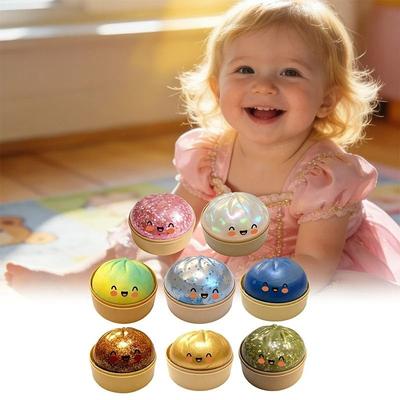
Uplift Essentials Simulation Flashing Dumpling Sensory Squeeze Toy Simulation Flashing Dumpling Sensory Squeeze ToyAdd a touch of playful squishy fun to your day with this simulation flashing dumpling sensory squeeze toy. Designed to look like a freshly steamed Asian dumpling complete with delicate dough pleats, this soft toy hides an exciting secretsqueeze or...41,97 $*Shipping: 0,00 $Secure redirect to the provider
-
Why do we say "il faut" in French instead of "on doit"? One reads "il faut" everywhere, very rarely "on doit." Why?
"We say 'il faut' in French instead of 'on doit' because 'il faut' is a more common and idiomatic expression in the French language. It is used to convey the idea of necessity or obligation in a more formal and impersonal way. On the other hand, 'on doit' is more direct and personal, implying a specific obligation or duty. Therefore, 'il faut' is preferred in a wider range of contexts and is considered more polite and appropriate in formal or general statements." **
-
Why do people say "il faut" in French instead of "on doit"? "Il faut" is read everywhere, while "on doit" is very, very rarely seen. Why?
The phrase "il faut" is used in French to express the idea of necessity or obligation, while "on doit" is used to express the idea of duty or responsibility. The use of "il faut" is more common because it is a more general and impersonal way of expressing necessity, whereas "on doit" is more specific and implies a direct responsibility or obligation. Additionally, "il faut" is a fixed expression in French, while "on doit" can be more easily replaced by other phrases or constructions. Therefore, "il faut" is used more frequently in written and spoken French. **
-
Has anyone of you ever read the book Il faut sauver Saïd?
As an AI language model, I don't have personal experiences or the ability to read books. However, "Il faut sauver Saïd" is a French novel written by Brigitte Smadja. It tells the story of a young boy named Saïd who is struggling to find his place in the world. The novel addresses themes of identity, immigration, and belonging, and has been well-received for its powerful storytelling and thought-provoking content. If you have read the book, I would love to hear your thoughts on it! **
-
What is the difference between "il faut" and "on a besoin" in French?
"Il faut" and "on a besoin" both express a need or necessity in French, but they are used in slightly different contexts. "Il faut" is used to express a general necessity or obligation, while "on a besoin" is used to express a specific need or requirement. For example, "Il faut manger pour vivre" (One must eat to live) expresses a general necessity, while "On a besoin de nourriture pour survivre" (We need food to survive) expresses a specific need. **
* All prices are inclusive of VAT and, if applicable, plus shipping costs. The offer information is based on the details provided by the respective shop and is updated through automated processes. Real-time updates do not occur, so deviations can occur in individual cases. ** Note: Parts of this content were created by AI.